For Sue Vincent’s weekly #writephoto challenge. Interestingly, as I sat down to write about her photo, I glanced over at my teacup and noticed I had also chosen a stag/ reindeer for the morning.
The chief looked to the horizon, forever surveying the movement of water. All life was cataloged in its molecules, and the chief never tired of reading its memories. There was a comfort to living in this slow time of stone where stasis reminded people who passed by that there is a lingering but also a letting go. The water, forever rocking against the hard stone, eroded centuries and not minutes.
The chief had seen it all. He had watched the reckless shatter against his chest. The mighty who would defeat fall back into the belly of the womb as though returning to the beloved without choice. And, he had seen love, oh yes, he had seen love.
Each morning he watched the sun make love to Earth, filling her with the seeds of its golden light. He watched the sky blush into crimson before it widened into the blue expanse of truth, spreading open without end. Birds, defying gravity as they lifted to the beyond and danced love across the horizon. And in the deep below, he felt it. Love, spreading through liquid memory in the song of the whales and dolphins echoing the heartbeat of the goddess as it stirred through strata and sank deep into his bones.
For Sue Vincent’s Weekly #WritePhoto prompt #stillness
In part one of “Simple Mindfulness Techniques for Children,” I discussed how to create a “Bubble of Joy” with children as a way to instill a sense of wellbeing. Creating a rainbow bubble is also a great way to begin a meditation practice, which is the focus of this post.
I had a friend once tell me that there’s only way to meditate, at least by its truest definition. Her words rang in the tune of elitism, and I was a bit taken aback. Thankfully, I think fewer people now ascribe to this notion than perhaps they once did. Instead, there is the growing realization that we are all unique, and a one-size-fits-all approach to meditation will never work. Especially when it comes to children.
When I am in a classroom with young children, I am acutely aware of how different each child is. Children, for the most part, are unabashed about showing you who they are, and their emotional bodies spark with their unique light. It is both a joy and a challenge to try to teach yoga to their unique blueprints. It is even more of a challenge to get them all to conform to one type of meditation practice.
Children thrive when they have a bit of structure to support them. If you give them too much freedom, chaos will inevitably ensue. Too many rules will cause rigidity and the dimming of their sparks. During my first visit to a classroom to teach mindfulness and meditation to a group of 22 children covering grades 1-4, I quickly learned that even if I wanted to, I was not going to find success in a one-size-fits-all system. Instead, I allowed my own inner-child to take over as I explored perhaps more options than necessary to engage children in the practice of mindful meditation. Here are some of the things I have learned along the way:
Concentrate on Quieting the Mind and Not Conforming the Body
If you wish to bring meditation into a classroom with the rule of sitting quietly for a certain amount of time, good for you. There are numerous benefits to the simple act of sitting in silence for a short amount of time. For young age groups, start small and add minutes gradually. I found two minutes of quiet time was a good target for the younger age groups. I also found that it was futile and unnecessary to expect them to close their eyes. A child can sit quietly with her eyes open and still reap the benefit of stillness. We never know what is going on inside a child’s mind, and expecting her to close her eyes may elicit emotional discomfort.
Likewise, although you may want to set a rule, such as no lying down (I did because of space, believe me at least one child will ask to lie down), try not to be a stickler for how each child should sit and hold his hands. Instead, focus on the act of meditation itself and honor unique approaches to it. Discourage talking and giggling, but fidgeting is to be expected, especially when children are first learning how to sit in stillness.
Give Them Something to Hold
This can be a tricky one, as once again, there is no one-size-fits-all. I have found that calming stones, such as rose quartz (try to choose similar looking stones to avoid the impulse to “trade”) makes for a beautiful meditation assistant for children. Make sure the children you are giving them to are old enough to avoid the impulse to put the stones in their mouths or to throw them. There will often be at least one child who will, no matter what the age…
Some tumbled rose quartz similar to what I gave to the children. Rose quartz is a calming, heart chakra stone.
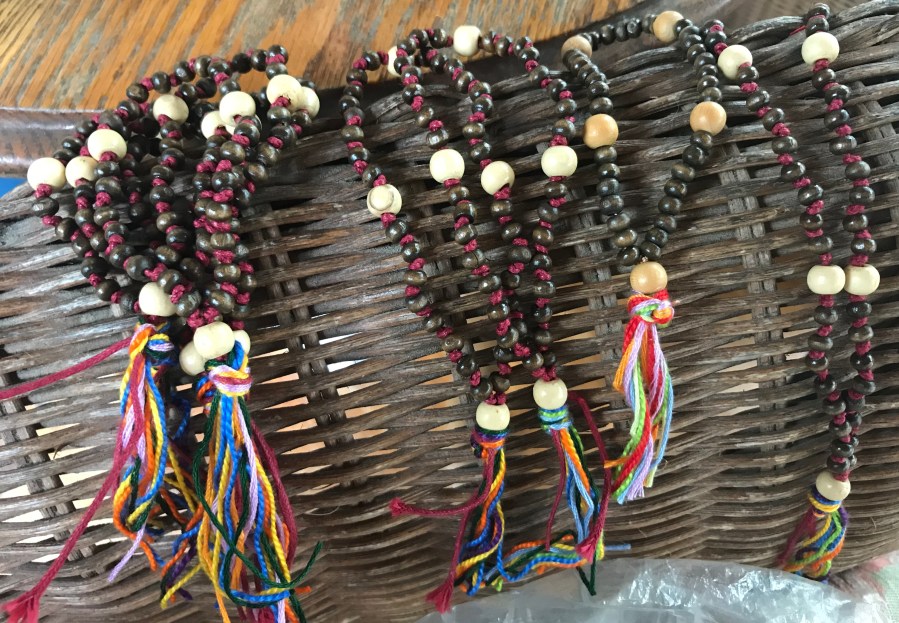
Which means that a stone may not be the right fit for that child. Instead, he might find more success with a meditation mala, or string of beads. Instead of sticking to the traditional 108 beaded malas per the yoga tradition, you can make mini malas (this can be a fun activity to do with the children). For the classroom, I made mini malas using 18 and 27 beads as fractions of 108 to keep with the sacred symbolism of the mala. I also used a different color bead as the 9th bead in each sequence, as 9 holds the symbolism of completion and “birth.” If you are using a mantra or affirmation with the meditation, this allows for the feeling of a complete cycle each time a child reaches the count of 9 beads. I also added rainbow tassels at the end to bring in the symbolism of the chakras and the “Rainbow Bubble of Joy.”
Some of the Mini Malas I made for the classroom.
The Power of Words
Children enjoy stories, and when I gave them their meditation beads, I told them a bit about the history of malas. It became a fun and engaging mindfulness practice as they examined their beads and asked questions such as, “Why did you use a different color bead?” for the 9th bead, and I asked, “Why do you think I chose the colors I did for the tassels?” Linking the Rainbow Bubble exercise to the malas allowed them to see that mediation is a mindful activity that can be infused with meaning and intention.
While we discussed the history of malas, I brought up the power of words (which will be covered in more depth in a later post) and told them a tiny bit about mantras. Since the class was not focused on the yoga tradition, instead of giving the children a mantra to use with their beads, we discussed the power of positive affirmations. It’s important to remember not to discourage children from sharing, or tell them that their answer is incorrect. Whatever feels right to the child is usually perfect for him or her. As we discussed different “I am” affirmations, some of the younger children took the phrase literally by adding their names at the end. While an older child could not resist the impulse to correct, I used the opportunity to gently remind her that there are no wrong answers, and that our names are, in fact, powerful affirmations of who we are. If a child is having trouble coming up with an affirmation, try suggesting a phrase such as, “I Am Peaceful,” or “I Am Love.”
By chanting a simple affirmation, or a series of affirmations, while moving beads through his fingers, a child can focus his mind and still a restless body. Although you and your children can make meditation beads out of anything you’d like, using wooden or stone beads can enhance their effect. If you are reserving a set of beads for an individual child’s use, you might discuss the energy of their words and thoughts. When mantras or affirmations are used with meditation beads, their energy is infused into the beads.
Engaging the Other Senses
Meditation with children need not be a transcendental goal, in fact, it’s probably better to leave that ambition out of it. Rather, encouraging a child to engage their senses in a focused manner will help them live more mindfully. Although I tend to lean toward having no additional ambient sound during meditation time with children, a soothing track of nature sounds or classical music can help restless bodies to settle down. Alternatively, having children focus their ears first on the sounds around them, then bringing their awareness into their bodies to hear the sound of their own breath and even heartbeat can bring a deeper awareness of their being. I like to use a chime to end the meditation time, three soft dings can gently ease their transition back to the classroom setting.
I also tend to avoid engaging the sense of smell with children. This can get into uncomfortable topics, and it can also be a distraction. In addition, some children are sensitive to scents, so even diffusing an essential oil might trigger an allergic or adverse reaction for some children.
Children love feathers. I usually let them choose one from a bag, using their intuition to select their own special feather that they can take home with them.
At the beginning of the post I mentioned that some children may prefer to leave their eyes open during a meditation practice. Allowing a child to study an object with focused attention, such as a crystal, meditation beads, or a feather, can be a wonderful way to practice meditation time. I often bring feathers I’ve found during my walks into the classroom and they are always a delight for the children. There are so many ways to explore the senses through a feather and they remind children of the wonder of the natural world. It is a good idea to be aware of what feathers are allowed to be collected by law in your state or country, as well as having children wash their hands after holding them.
If you are considering adding a “meditation” practice in your classroom or at home with your children, I hope you find some helpful tips in this post. If you are already using one, I’d love to hear about your experiences. After our meditation time is up, I find it to be a fun practice to allow for the sharing of children’s observations.
This post will be part 1 in a series designed to help cultivate mindfulness practices in the classroom and at home. It’s based on techniques I use in my mindfulness workshops and yoga classes for kids. We’ll begin with the “Bubble of Joy.”
The Bubble of Joy
Ideally mindfulness is a way life, and cultivating it as a daily practice becomes easier to do if you start and end your day with a mindful activity with your child or children. I begin almost all of my yoga classes for kids with an exercise that I call the “Bubble of Joy.” The Bubble of Joy uses the technique of pranayama (breathing), combined with visualization to generate a sense of calm and strength. It is also a form of empathic shielding, which is especially important for children who tend to unconsciously exchange and absorb energy from their surroundings. It is beneficial to children and adults alike, and is a great way to share a mindful exercise to begin your days together. If you are in a classroom setting, you can either have your children sit in a chair or on the floor in a circle.
Steps to Creating a Bubble of Joy
Sit in a comfortable seated position. For children, I ask them to do “criss-cross applesauce” legs.
Close your eyes and rest your hands on your lap, one hand on your belly and one hand on your heart, or use Namaste hands in prayer position at your heart center.
Visualize in front of you a beautiful rainbow. Spend some time seeing in your mind’s eye all of its beautiful colors.
Keeping your eyes closed, take a deep inhale from your belly all the way up to your heart and breath in all the colors of the rainbow.
Imagine those colors filling your heart and your whole body with joy.
Exhale as you bring your arms up and around you and imagine the rainbow now wrapping you in a Rainbow Bubble of Joy.
Repeat two more times. Inhale the hands down to the heart, bringing inside the colors of the rainbow. Exhale arms up and around to wrap the rainbow bubble of joy around you.
Simple Steps for Creating a Rainbow Bubble of Joy
Through this simple exercise, you and your child have created a beautiful shielding energy inside and around you that will help ward off negative feelings and instill a sense of joy and wellbeing. It can be repeated throughout the day, and is also a good practice to use before falling to sleep. The arm movements can be omitted, especially for a bedtime practice.
The hermit curled his head into his folded feathers. It had a been a long day. Heck, who was he kidding? It had been a long century. He was getting old, too old to be doing this work. And, he was tired. The kind of tired that sets into your bones long before they are supposed to return to the soil. He blamed the humans. The hermit discovered the plague of their greed soon after they started pumping darkness into the veins of Earth five thousand years ago.
He didn’t want to feel like such a curmudgeon. In many ways he’d rather be flying blissfully unaware with the starlings. All they did was gossip and cackle about the other birds as they picked through the dirt for worms. The hermit wasn’t much for idle chatter, though. He never had been. Life would have been easier, he thought, if he had been born into a state of blissful ignorance, but life had chosen him to be a hermit. To fly alone as he surveyed the land and catalogued its history into memory cells. Now the weight was simply too much for his body. His wings were too tired to raise him off the ground, and instead folded inward, protecting the heart that was heavy with time. Soon his body would become one with the Earth from which he was born, and he found himself welcoming that day without sadness or trepidation.
Peace, he thought, finally I will be at peace. But what of the rest? Beneath his winged shoulders, blue feathers of truth betrayed him. It was not yet his time. He had agreed to be a harbinger of death, but also of life. And the golden child had not yet been born. The hermit must wait a little longer to pass on the memories in his cells. Only then could he rest in the knowing that someday the light would be returned.
For Sue Vincent’s #writephoto prompt Harbinger. Please click here to participate in the challenge.
It has felt, for many months, or maybe even many years, as though we are collectively teetering on the fulcrum between fear and love. Some days there is a slight tipping toward love, on others I feel fear pushing its heavy weight into our hearts and there is a slipping towards an abyss that I care not to imagine. Yet, how can we not face our darkness? There are nights when I dream of the Earth caving in upon us, her mighty tongue lapping us back into her dying body.
Two days ago, I sat in a circle of 22 children and talked about love and fear. Although they were no older than 10 yrs. old, some of them already knew of the science behind our emotions. Before I pulled Dr. Emoto’s book The Secret Life of Water out of my bag, one child offered her scientific observations on two apples. One was spoken words of hate, the other words of love. There was an unease to her giggle when I asked her which one had decayed first. Although there is a knowing deep inside each of us, it is sometimes difficult to allow ourselves to understand the effects of our emotions.
We don’t always want to own our energy, or the fact that our energy is intricately woven with all life. If we talk love to water outside of us, it forms into a beautifully exquisite crystal. If we talk hate to water outside of us, the water separates into an ugly mass striving for cohesion. To me it resembles a bacteria smear on a petri dish. Each day it is fed fear, more toxic colonies grow. It’s worth thinking about what the water inside of you is doing, as I discussed with the children while they gazed at the photos of proof.
Everything, in essence, is energy. Somehow, over the course of thousands of years, we have learned to crave density. We amass wealth in the form of condensed energy thinking it will bring us joy, but we should all know that the tighter the wrap, the more difficult it is for the light to get shine through.
The scientific proof is there, yet many of us care not to see it. Just like the scientific proof exists, and has for many decades, that our climate is indeed in a state of crisis. A crisis brought upon by our individual and collective choices to push the lever towards greed. We care not, for the most part, to see what is going on outside of us or inside of us through the lens of science and truth.
This morning, I decided to scroll through a few comments on Greta Thunberg’s Twitter feed. I have been thinking about this courageous and brilliant young woman a lot lately, and how she has chosen to weather our collective storm valiantly without fear of personal attacks. Of which there have been numerous. One needs only spend about thirty seconds on Twitter to see there are nearly equal tweets on the spectrum of fear/hate as there are on the spectrum of love/reference for this truth seeker and speaker. I found myself amazed, yet not really surprised, by how many people self-righteously send out the energy of hate towards a young woman whose only motivation is to save them, and in the process herself and the planet we all share. It’s mind boggling in its essence. Yet, it’s not. Some of us really like our fear and hate. It makes us feel powerful with all its lies and self-loathing so that we forget that we are harboring and feeding a cancerous mass inside of us.
It would be amusing how much we fear the truth if it were not so disturbing. I have realized, over these past several days while thinking of Greta and all the courageous youth who are standing and speaking up with her, that somehow, quite miraculously it seems, we have birthed new generations who do not hold onto fear the way most of us do. Perhaps it is because they have not yet lived long enough for fear’s weight to grow into a cancerous mass inside of them. I like to believe, though, that somehow they were born with an immunity to it. That finally, we are moving toward the light as we push fear’s weight into the abyss from which it came. If I don’t believe it, the alternative is unimaginable.
I was a little apprehensive when I agreed to teach a fall yoga series outdoors, continuing the summer mornings in the field into the chilly lazy dawn of autumn. Cold is not something I relish, and thoughts of ice-tipped blades of grass pulled me inward to the comfort of the hearth fire. Yet, I have found that agreeing to walk the path of potential discomfort often yields the greatest and most unexpected rewards. As the heart opens to trust, magic unfolds. And so, after a brief interlude of transition, Tuesday morning yoga in the field continued at 8:30am.
The sun crests the canopy of pines ever more slowly as the days shorten in length. Unlike during our summer classes when we nestled into the far corner to avoid the boiling sun, on the first day of our fall session we laid our mats near the parking lot in the hopes of catching the first rays whenever they chose to stretched their languid arms over the tree line. There were just three of us, a trinity of yogis. Where were the others on the list? I wondered until I let worry give way to the flow of the elements and the dance of the body that is yoga took over.
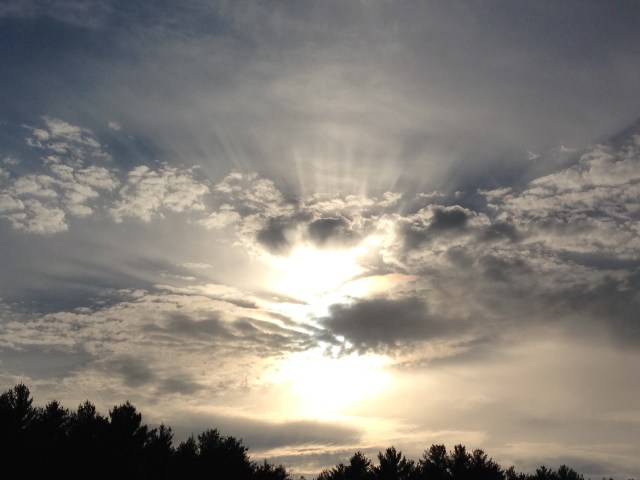
Midway through class, we straightened our spines into balanced as the sun broke the cold of the morning to bring its golden face above our crowning bodies. It was not planned, yet perfectly timed. In these moments, time stills as we open to the embrace that is life. It is beautiful to bear witness, and even more beautiful to take part. One cannot help but breathe more deeply into the space of joy and the knowing that the self has been brought out of the shadows into unity. Separation slips way and division dissolves. In the imperfection of the individual dance, once finds the perfection of Life.
We are now three weeks into our fall session, and each Tuesday I wake to meet the habit of reluctance as I check the weather through the gray light of the waking dawn. Donning the increase of layers on all but my feet, I sink into the knowing that my soles will soon meet the bracing grass. I don’t know what will await me, but so far I have been lucky. Frost has not yet spread ice over the land.
I like to arrive at the field down the road from my house early, allowing for the quiet stillness of solitude as I drink in the morning air. Realizing, as I stand amid a frame of pines and listen to the soft pulse of nature around me, that I would likely not be outside at this hour practicing yoga if I had not said yes to another class in the field. Realizing, that instead I would probably be sitting with my computer on my lap, occasionally looking out at, but not a part of, the natural world surrounding me.
Our yoga classes are full now, after the first week of transitions and coming back to the fall of routine. We form a semicircle of unity, each bringing our individual light to the breaking dawn and finding warmth in companionship as we stretch our bodies into heat. Inevitably, the sun rises over the treetops at the moment when our faces lift to feel its warmth. Nothing is preplanned as destiny takes over. Yesterday, in our moment of raising our eyes toward the blue beyond, a flock of two dozen geese or more flew overhead. They were flying low, having just come from the pond below, bringing the element of water to the sky as we stood upon the earth and and warmed our skins to the sun’s fiery rays. You don’t get moments like this indoors inside four walls with windows and a floor that separates the individual from the pulse of the living planet.
There was lingering yesterday, as we rolled mats and folded blankets. There was reluctance to put on shoes and hoist our belongings back to our cars to resume our separate lives. Pairs formed to talk while the cells on the surface of skin drank in the sun’s warmth. No one was in a hurry to return to the daily actions of the mundane. For a few more moments the living, breathing present was embraced as the gift it is, always open to be received.
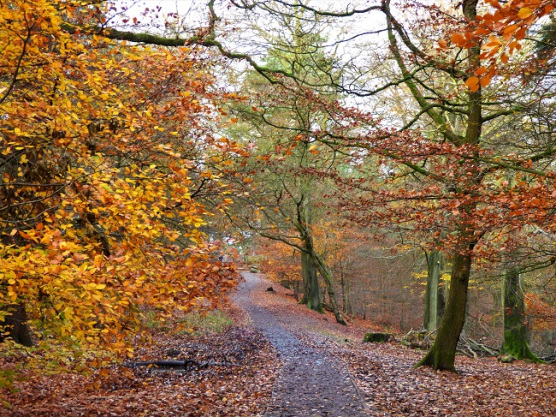
I woke with the lyrics of the hymn playing inside of my head in the voice of Judy Collins, even though I grew up listening to Cat Stevens singing “Morning has Broken.” I have not heard the song in years, but there it was, singing inside a mind that refused to fall back to sleep. In my dream, I had been writing this blog post while the beauty of the song played on repeat.
Before I went to sleep last night, I watched most of the U.S. democratic presidential debates. “Are they still on?” my son asked when he came downstairs in preparation for bed. He had suggested we watch them, and together we had for about an hour.
“Yeah, I told him, but they haven’t even gotten to the environment yet.”
“Maybe it’s not on the agenda topics,” my husband replied.
Instead, the focus was on healthcare and gun control. Two topics I will not deny are essential to individual wellbeing. But, if we don’t tend to the home we all share, we won’t have individual selves to care for. Eventually, the morning light will not break into a new day on Earth.
16-yr. old Greta Thunberg is now famous for telling us, “Adults keep saying we owe it to the young people, to give them hope, but I don’t want your hope. I don’t want you to be hopeful. I want you to panic. I want you to feel the fear I feel every day. I want you to act. I want you to act as you would in a crisis. I want you to act as if the house is on fire, because it is.”
The truth is, most of us are more concerned with our own houses, than the home we share. Neglecting to realize that our individual houses are irrelevant if we don’t take care of the planet. Simply put, our house will burn if we continue to ignore the fact that our collective home is literally on fire. Immense forests, the lungs of our Earth, are burning because of climate change. While the land burns, the waters are rising. In attempt to shake us awake, our home is self-destructing with our help.
I realized as I was waking this morning that the song playing on repeat through my dreams was not a song, literally, of mourning, but a hymn of praise to the new day. It is also, though, a praise for union and the truth that we are “born of one light.” The song is incredibly beautiful, and it is no wonder it has been sung by various artists throughout the years. It may have originated as a Christian hymn, but it has a universal appeal, as Cat Stevens, also known as Yusuf Islam, has shown us.
Although I don’t adhere to a religion, I believe that we are all birthed from the same light. A light that weaves through all life, including this living planet we call home. We have, collectively, over many years, but more so in the more recent past, worked more to break this light than to honor it and nurture it.
Science says we are creatures of habit. It can take an individual two weeks to a year to break an old habit and form a new one. Sadly, we have made a global habit of looking out more for the individual self than our selves as an integral part of the web-of-light/life that we are all a part of.
The other day, I watched a brief clip of Greta being interviewed by a morning show on a major network here in the U.S. She had just traveled to the states via a zero-emissions boat. As her visibly uncomfortable interviewers also pointed out, she has also walked to their studio.
It takes a fair amount of discomfort to welcome in a “new morning” in favor of the one we are used to greeting. It takes a stretching of the eyes and mind a little wider to really see what exists beyond our myopic field of perception. But, the rewards are infinite. Imagine, for a moment, a new morning breaking into day. Imagine your beautiful light weaving into the light around you. Imagine what you can bring to this new day.
Admittedly, most of us will not change all of our habits, and certainly not at once. I know I am not ready to give up travel by plane to sail across the ocean, but there are choices I can make in each moment to dim the light, or to grow it. Here are a few that we can all consider each morning after we wake:
Skip the K-cups or the Dunkins run and brew a cup of fair trade, organic coffee or tea. (If you really want that Dunkins or Starbucks, bring your own reusable mug.
Gather a full load of laundry before starting the washer, and use warm (not hot) or cold water to wash. The next time you buy detergent, choose one free of harsh chemicals and dyes in the most environmentally friendly packaging you can find. Just say no to those hard plastic containers! If your washer kicks the bucket and can’t be fixed, buy an energy efficient one. When your load is done, hang it outside in the sunshine and save some money by using free, fossil-free energy! If you must dry it in the dryer, use an eco setting and wool dryer balls in favor of toxic non-reusable dryer sheets.
Likewise, run your dishwasher only when it is full on the energy-saver setting with eco-friendly detergent in eco-friendly packaging.
Make the choice to eat low on the food chain, and finish what is on your plate. If you can’t eat it all, save it for another meal. Compost what you must discard. Grow what you can, or buy it locally and organic.
Water the lawn only if you really need to, and tend to it with organic lawn care. Better yet, grow more plants and trees that don’t require maintenance and nourish your body, wildlife, and the lungs of Earth in the process.
Carpool to work or school in the most low-emissions vehicle available. Or, better yet, walk or ride a bike when the weather permits it.
Skip the hair dryer, iron, and curler, even if it’s just only weekends.
Unplug appliances that are not in use.
Turn off lights and heat in unoccupied rooms. (And when they are in use, make sure your using the most eco-friendly options available to you).
Support local business and farmers who are working on, or using, sustainable practices for the planet.
Invest your money in the future rather than the immediate pleasure of instant gratification.
Teach your children that caring for their planet will ensure they have a planet to care for them.
If you want to add a child or a pet to your home, consider rescuing one from a life of poverty and homelessness.
Wear your clothes until you can wear them no more, then use them as rages, make something new out of them, or donate them to someone who can use them.
Buy local. Buy eco-friendly. Buy used. Buy only what you need. Use a reusable bag to put your purchases in.
Support zero-emissions energy sources whenever you are able to.
Turn off the water when you brush your teeth. Turn down the water when you shower.
Skip the plastic whenever possible. Use refillable containers. Buy zero-waste products. Remember most of our waste is no longer recycled, and when it is, it takes large amounts of energy to do so.
And, most of all, breathe in the beauty of each morning. Breathe in joy and gratitude for the new day. Breathe in light and Breathe it back out. Imagine a new day where devastation is replaced with joy. Take at least one action each day to co-create another morning for all.









 The Light Behind the Story