
The star and the labyrinth have been worldwide symbols throughout history (and most likely, prehistory), but they are not commonly combined. So why did I choose to merge the two in my metaphysical fantasy series, Warriors of Light?
To answer this, we need to explore the metaphysical origins of both. Let’s start with the star, and why I chose a hexagram.
Typically stars, when used in the realms of magic, contain five or six points. Five pointed stars are often associated with witchcraft or sorcery, and although my series is filled with “magic,” it is not the type of magic that comes from spells and wands. Instead, I wanted to explore the magic of creation. The magic that that feeds and threads through all life. And, I wanted my readers to explore their own journeys of connection. Therefore, I needed to use a six pointed star.
Otherwise known as the hexagram.

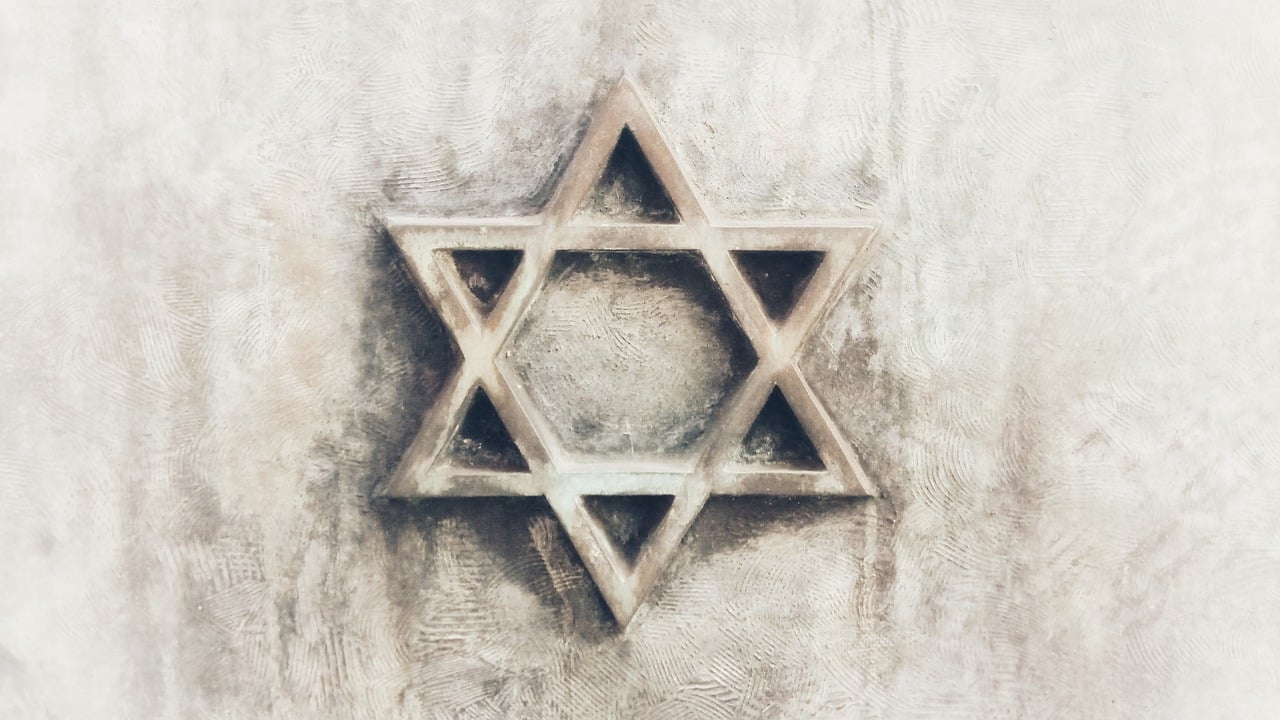
The hexagram star is widely known and utilized as a symbol for both secular and nonsecular purposes. I was particularly interested in the hexagram as a symbol that predates religion. I wanted to explore it in its “magical” elemental form. To examine its individual components (in particular, the elements that overlap and join into one). I wanted to break down the whole into the essence to form the whole again. Herein lies the origin of the labyrinth as a hexagram.
Sound confusing?
Let me try to explain by switching for a bit to the labyrinth as a symbol. A labyrinth is often defined as a maze-like structure, but in the metaphysical world the maze becomes a pathway the individual takes to learn about the inner self. It is, in essence, and a journey that begins on the outside and leads to the inner core. One travels upon it to gain spiritual insight and clarity, as well as a sense of connection to Life.

According to the Labyrinth Society, the labyrinth as a spiritual symbol has been around for at least 4,000 years. It has a defined structure that resembles more or less ordered pathways that lead from the outer to the inner, rather than a maze intended to confuse and disorient. The labyrinth as a maze looks more like this:

For the purposes of my series, I chose to combine the maze of confusion with the labyrinth as spiritual pathway. I wanted it to be both a journey that could trap and disorient, as well as a means to reach the central core of Life. To be more like everyone’s journey. Most of us don’t find balance and connection without a fair amount of setbacks (or traps in the case of my characters), as well as a great deal of mucking through the darkness of the shadow self.
Which brings me back to the hexagram star and the “key of balance” (that comes more into play in book two of the series, yet to be released). In the Warriors of Light there are six warriors on the cusp of adolescence, at the age of thirteen when the child self dies to make way for the adult. These six warriors must not only walk individual outer paths to get to a deeper and more mature (or wiser) understanding of themselves, they must also intersect their pathways to heal the origins of Life itself.
Therefore, I needed a symbol of balance with six starting points for each of my six warriors. I needed a star with six points (of light) that joined and overlapped. A hexagram star.
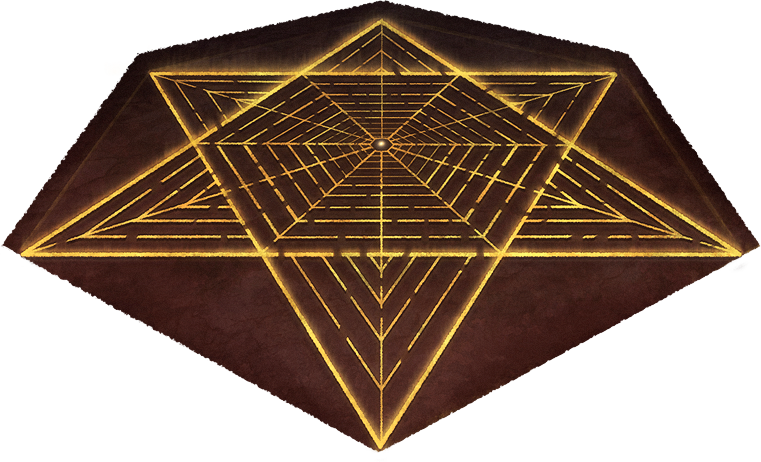
The hexagram as a spiritual symbol, like the labyrinth, predates organized religion. Although it seems unclear exactly where its origins lie, or for how long this symbol has been used, the hexagram has a history across the globe. And, as a magical symbol, represents harmony and balance. Two equilateral triangles overlap to form a star. One pointing above, one pointing below. In elemental terms they are often viewed as representing water and fire (and sometimes combined with earth and air). A balance of yin with yang. Masculine and feminine energies merging into one.
My six warriors are not only a mix of “males” and “females,” within each of them is a predominance of one or more elements, as well as ethnicities. And, as a group, there is a balance of yin and yang energies that don’t necessarily follow societal norms. Together, they are tasked with a mission to restore balance to the world. A balance that has been broken by the impacts of the human race. To restore this balance, they must navigate the broken pathways of the labyrinth as a hexagram and restore the light of connection. And so, therein lies a story of the hexagram as a labyrinth.
 The Light Behind the Story
Interesting background for your series. I tend to associate a labyrinth to ancient Greece/Crete, but I do know that in the middle ages they set up mazes on large estates to do virtual/spiritual pilgrimages to Jerusalem without ever leaving home, which goes in with your definition of labyrinth. It was a way to force meditation. Also interesting that a maze is route through while the labyrinth the destination is the center.
LikeLiked by 1 person
Thank you, Trent. I think they both have such a rich history and are fascinating symbols and devices as you’ve stated.
LikeLiked by 1 person
Thanks for the fun and informative background to the symbols and your books Alethea. This was probably in your preface, but in hindsight, it really helps focus the story which I enjoyed greatly!
LikeLiked by 1 person
Thank you, Brad. It is not in a preface to the series, but perhaps it should be…
LikeLiked by 1 person
I think it would be helpful.
LikeLiked by 1 person
I think it would too.
LikeLiked by 1 person
Fascinating. Maybe the spiritual process you describe could form the basis of the activities with adults in nature that we talked about elsewhere. The only ‘adults in nature’ activities I’ve been able to find out about focus on learning bush crafts like fire making. Maybe making impermanent representations in nature of the geometric shapes you describe here and then using them as the basis for experiential activities could be more in keeping with what you were thinking about.
LikeLiked by 1 person
Oh yes! I’m so glad you see that too. I envision a game for all ages that involves the labyrinth as hexagram as well as a physical maze walk. There’s so many possibilities…
LikeLiked by 1 person
It sounds so creative. I look forward to hearing where you take it. 🙂
LikeLiked by 1 person
Thank you 🙂
LikeLike
I really like the way your hexagram=labyrinth forms a web. (K)
LikeLiked by 1 person
I’m so glad. It is also meant to represent “the web of light/life.” You and Suzanne have picked up on some key insights.
LikeLiked by 1 person
Pingback: Six-Pointed Star Spiritual Meaning and Symbolism - Spiritual Marker